



-
IR Liquid Cells
ir-liquid-cells-
-
Sealed Liquid Spectrophotometer Cells - Model SL-15

ICL's new RoHS compliant Model SL-15 sealed liquid cell (patent pending) features a unique sealing system employing fluoropolymer seals which enable us to produce precisely calibrated cells that completely eliminate mercury and lead amalgam seals from the fabrication process. These cells are fully compliant with RoHS Directive 2002/95/EC. The ROHS Compliant SL-15 can be employed in any general lab application, but the seal system is so robust that it is also suitable for high internal pressure environments such as flow cells used for viscous samples like oil. Where there are internal cell pressures as high as 40 psi, cells with suitable windows will remain leak free and maintain their path length integrity with long service life. Cells with windows that are insoluble in water can be pressure tested and certified to the customer’s desired specifications. Because the cell is so robust, the normal cell filling process that is required to avoid damage to standard lead mercury amalgam sealed cells can be skipped and users no longer have to fear for broken cell seals. The SL-15 can be modified to accept a number of inlet and outlet connections, but it comes standard with luer lok fittings. There are standard flow cell adapter kits that fit luer lok equipped cells to enable easy conversion of the cells to flow cell tasks.
-
Sealed Liquid Spectrophotometer Cells - Model SL-2

The SL-2 was designed for precise analysis of liquids. The cell performs identically to ICL’s SL-3 and SL-4, but requires 32mm x 3mm windows instead of the usual rectangular or hexagonal shaped windows.
-
Sealed Liquid Spectrophotometer Cells - Model SL-3

The Model SL-3 Stainless steel sealed liquid spectrophotometer cell ensures accurate visual alignment of the cell components. These cells never have partially blocked filling ports and they never leak.
-
Sealed Liquid Spectrophotometer Cells - Model SL-4 Heavy Duty

ICL offers a heavy duty, corrosion resistant sealed liquid spectrophotometer cell designed to withstand rough handling and continuous sampling in laboratories. The large 25mm circular aperture is suitable for use with both dispersive and FTIR instruments.
-
Sealed Liquid Spectrophotometer Cells - SL-4P Purgeable Heavy Duty
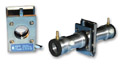
Our SL-4 cell is now available in both demountable and sealed cell configurations that are purgeable while the cell is in the instrument, by using a Constant Purge™ bellows attachment.
-
Sealed Liquid Spectrophotometer Cells - Long Path Absorption
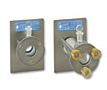
The Long Path Absorption Spectrophotometer Cell is for IR/FTIR analysis of dilute solutions or solutions that absorb weakly. The cell has been found to be particularly useful in hydrocarbon testing, such as testing for the presence of oil in water, conforming to EPA methods 418.1 and 413.2.
-
Sealed Liquid Spectrophotometer Cells - ICL Infrared Variable Pathlength Cell

The Variable Pathlength Liquid Spectrophotometer Cell can eliminate the need for a large collection of different fixed pathlength cells at an economical price.
-
Sealed Liquid Spectrophotometer Cells - ICL Heated Variable Path Length Cell

The heated variable path length cell can be heated to 200ºC and comes complete with a programmable ramp and soak temperature controller with RS-232 serial cable computer interface (0017-5548). The cell back plate is water cooled and the body is insulated as is the vernier scale adjustment on the front of the cell to enable in-situ variation of pathlength while the cell is hot and fixtured in the sample compartment of an FTIR instrument.
The cell consists of a cylindrical stainless steel chamber containing parallel windows. The pathlength may be continuously adjusted from 0.05mm to 5mm and reproduced within 0.001mm (1 micrometer). A vernier scale provided on the cylinder permits the cell pathlength to be read within 0.0005mm (0.5 micrometer). In order for weaker absorption bands of many liquids to appear with the proper intensity, the stronger bands will be totally absorbed and their exact location thus obscured. In these situations, the Variable Pathlength Cell may be precisely adjusted to provide just the right intensity for exact location of both weak and strong bands.
